


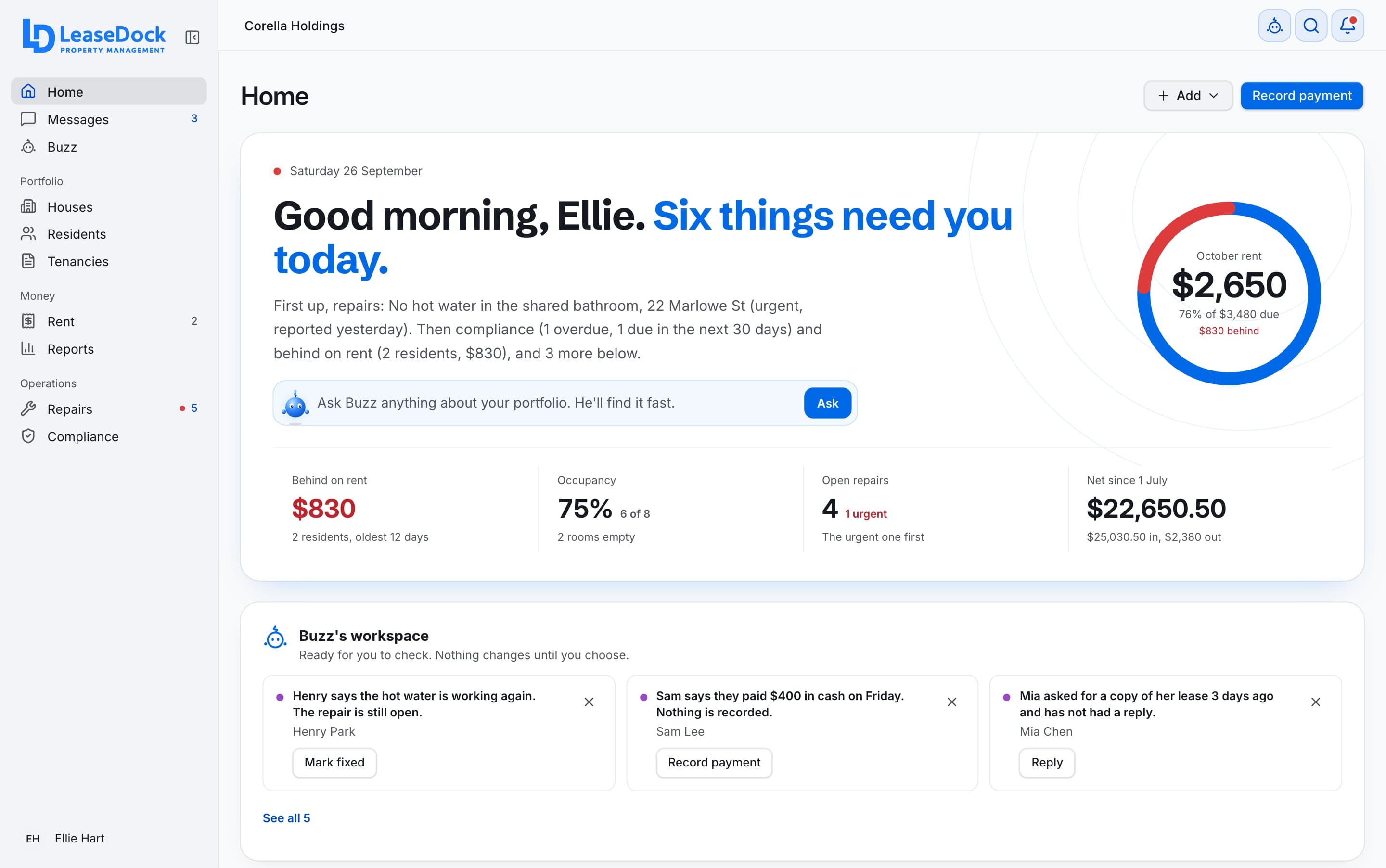
Own the rentals. Skip the admin.
Built for Australian rentals. Rent, repairs and every compliance date, with your state’s rules built in.

Two houses or two hundred rooms.
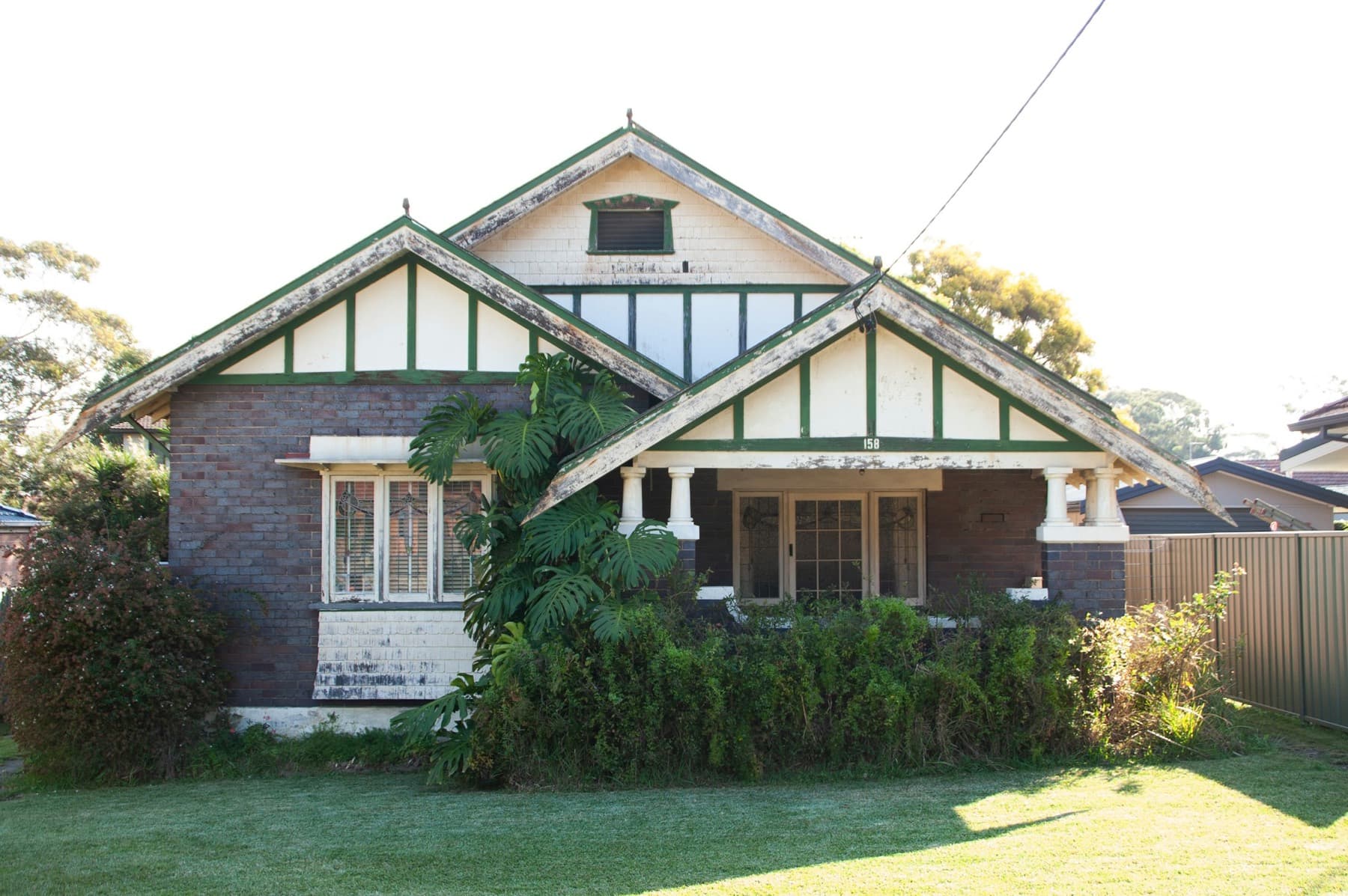
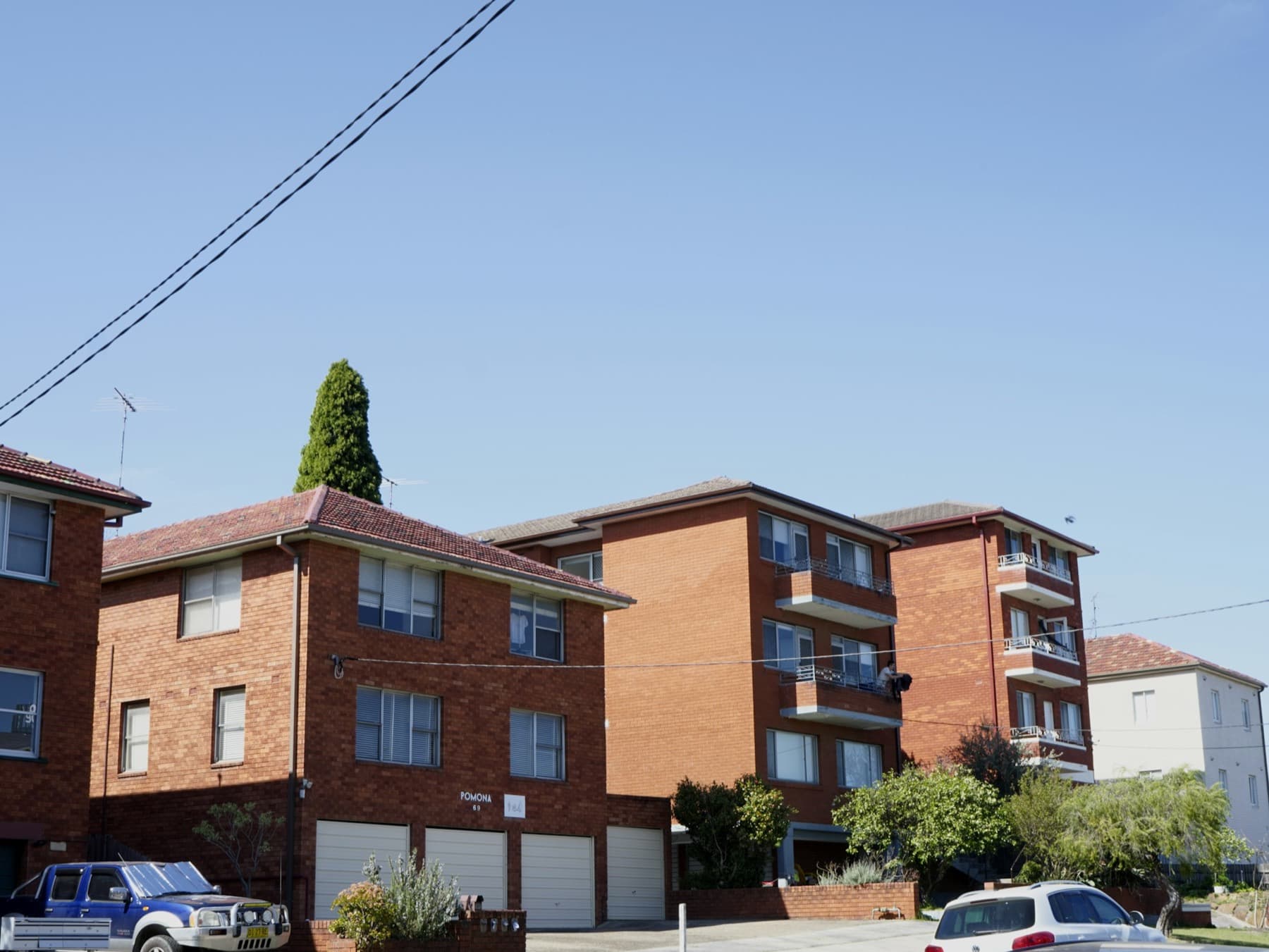
A house, a few units or a whole building. Whether you manage it yourself or your own team does, LeaseDock knows which rules apply to each one.

Meet Buzz, your assistant in LeaseDock.
Ask him anything about your properties or the rules in your state. Tell him a job and he lines it up for you. Nothing happens until you approve it.
He can also start a condition report, draft a message to a renter, pause rent reminders for a payment plan, fill in your state’s dates, and dozens more jobs.

Every renter gets their own portal.
Rent, repairs and messages land on their record, where your team can see them. Buzz can read them too, if you let him, and turn them into next steps you approve with a tap.
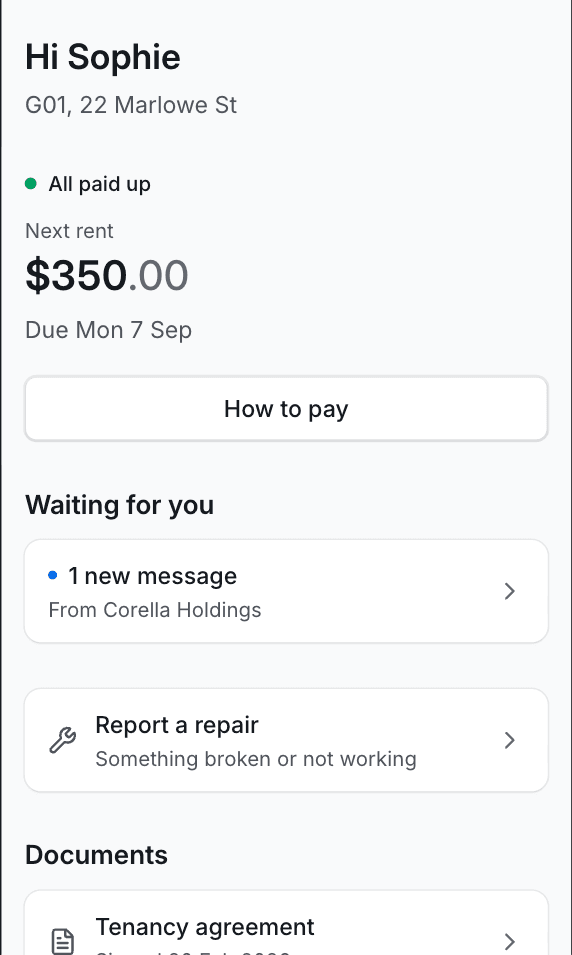
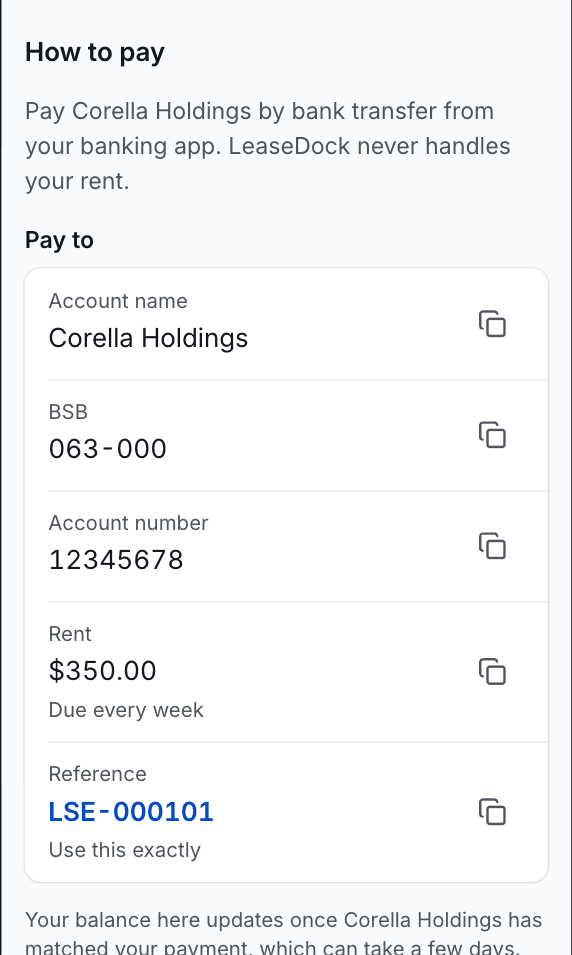
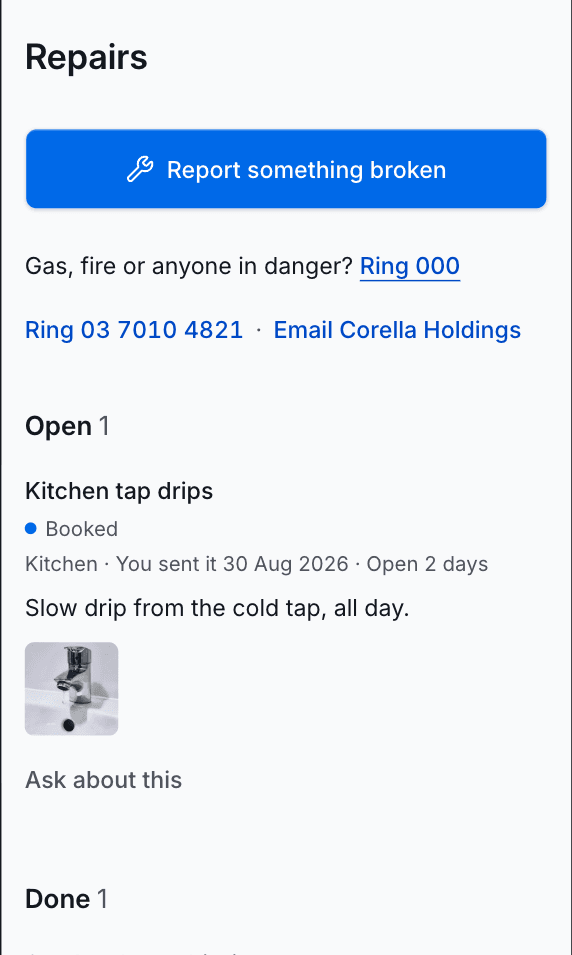
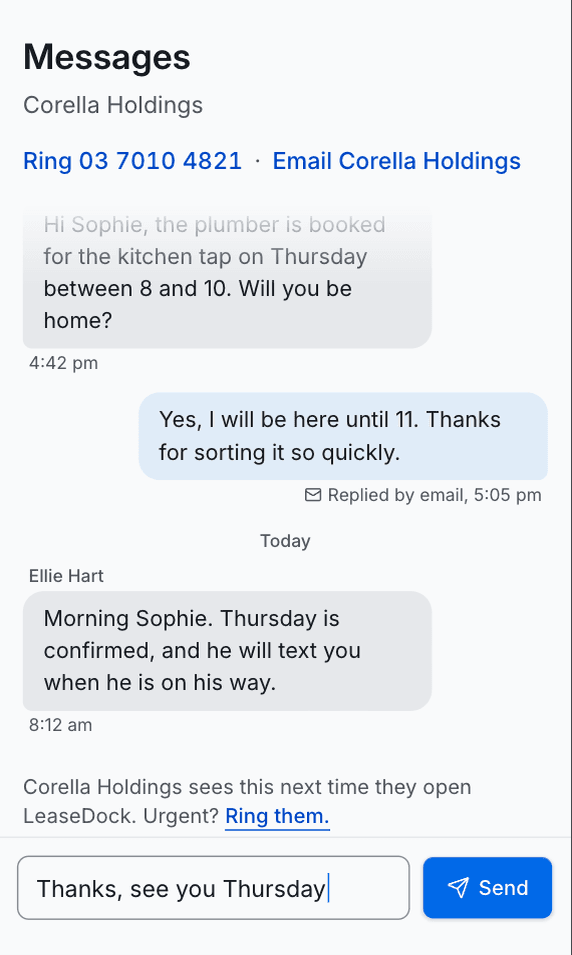
The one question a renter has, answered at a glance. Everything else is a button with words on it.
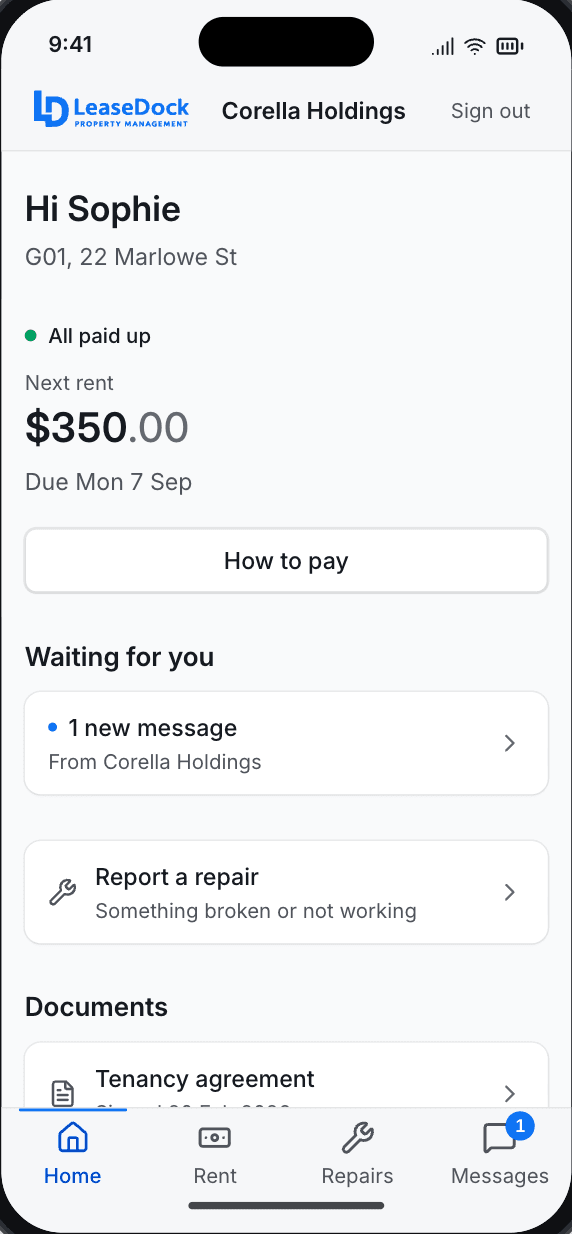
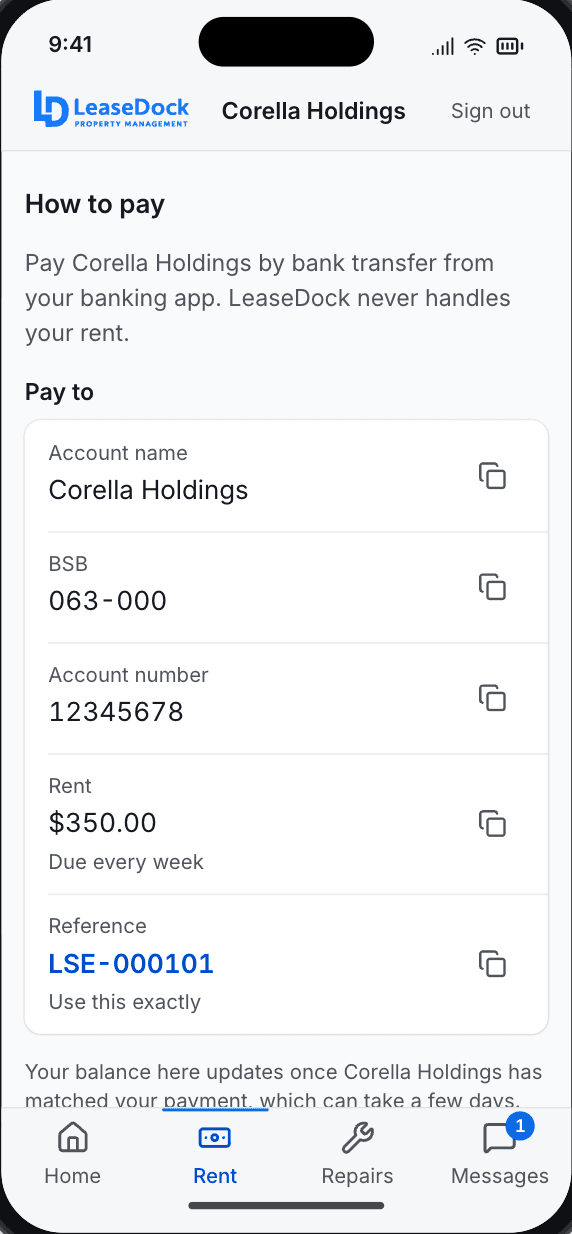
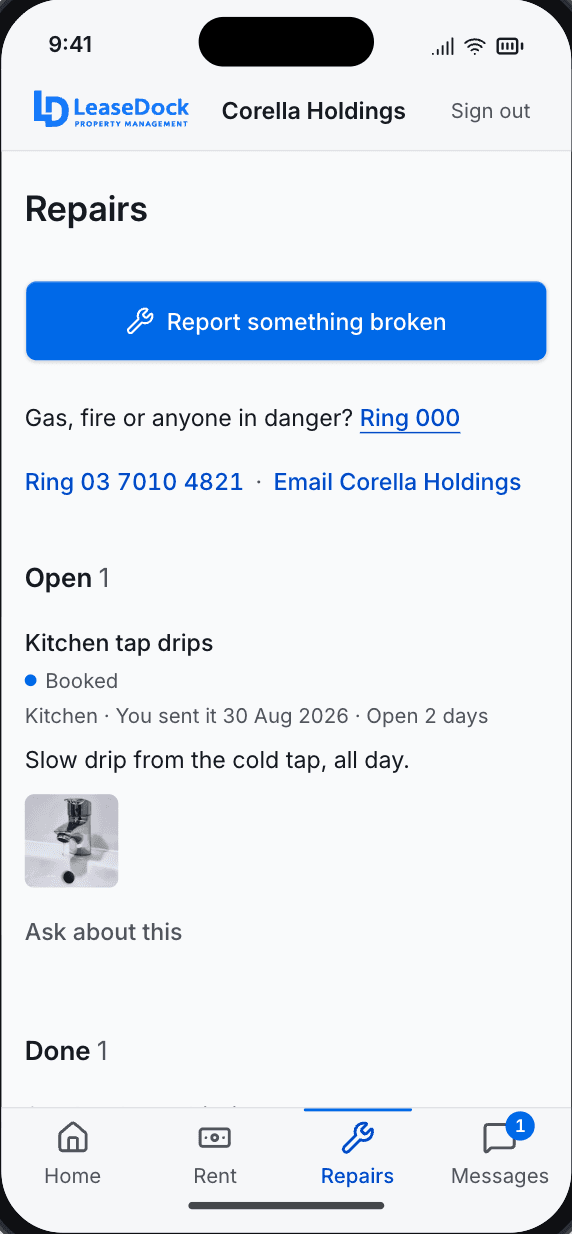
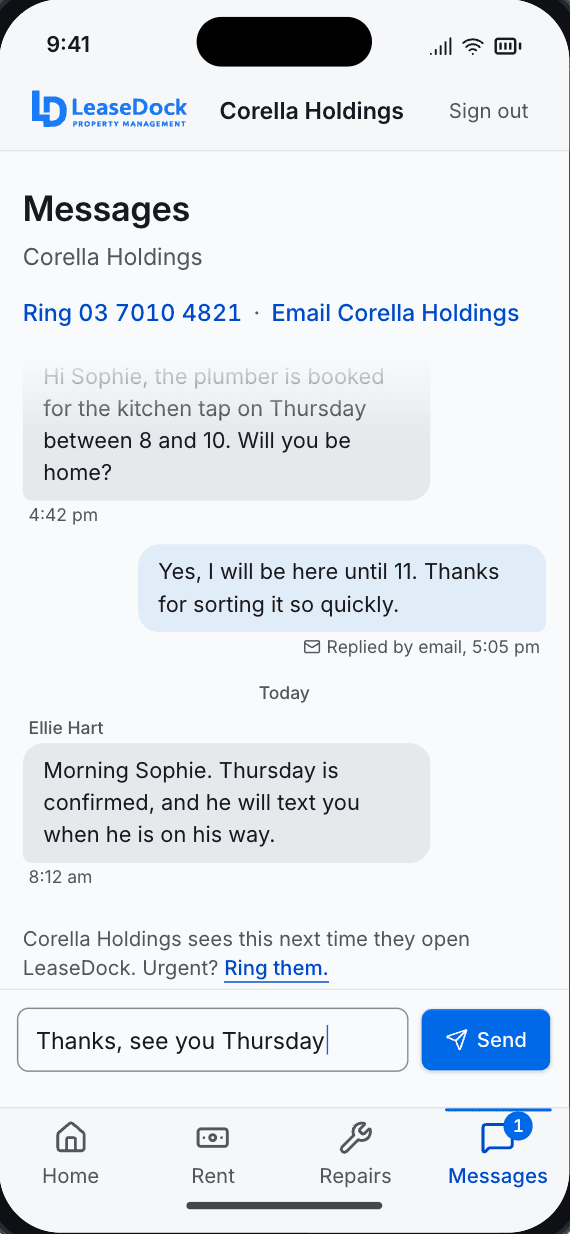
Every duty, easy to track.
Each state has its own rules, and a rooming house plays by different ones to a house. LeaseDock knows which apply to each property, and turns them into dates.
Tap a state
Compliance
14 Albert St · 3 legal dates in the next 30 days
Next 30 days3
Notice periods
Inspections, room by room.
Entry, routine and exit reports on your phone, signed by your renter and stored safely.
- Walk it Tap OK or Issue, room by room.
- Snap it Photos filed against the item.
- Sign it Your renter signs in their portal.
Victoria, since 13 Oct 2026: give your renter the evidence for a bond claim at least 3 days before you claim. LeaseDock drafts the notice from your exit report.

Your records, kept up to date.
When something slips, Buzz asks. Rent due yesterday with nothing recorded, a check that was due, a repair that’s gone quiet. Answer with one tap and the record is updated.
Turn on message reading and he also picks up what renters tell you. Nothing changes until you choose.
Ready for you to check
Rent from Sam was due yesterday and nothing is recorded. Has it come in?
Sam Lee · 22 Marlowe StRecord paymentNot yetThe smoke alarm check at 22 Marlowe St was due yesterday. Was it done?
ComplianceMark doneNot yetThe dripping tap at 9 Fenwick St was booked and nothing has changed in 9 days. Is it fixed?
Mia Chen · 9 Fenwick StMark fixedNot yetTom mentioned he is moving out at the end of next month. No notice is recorded.
From Tom’s messagesRecord notice
Rent comes in. LeaseDock keeps count.
Upload your bank’s CSV export and LeaseDock matches each payment to the right rent, for you to confirm. When rent is late, LeaseDock checks with you first, then sends a polite reminder on your state’s timeline, and the reminders stop as soon as the payment is recorded. Renters see every payment in their own portal.
Bring your spreadsheet.
Drop in the sheet you use now. LeaseDock reads your properties, renters and rent, and shows you what it found before anything is added.
See how switching works- Money inRent, Room 1, 22 Marlowe St$260.00Confirmed in your bank
- Money outPlumber, 7 Ash Ct$180.00Receipt attached
- Money inRent, 14 Hale St$520.00Sent to Xero
Works with Xero
Already on Xero? Keep it.
Connect your Xero organisation and LeaseDock sends rent payments and expenses across, tagged by property, with the receipt attached. When a rent deposit is reconciled in Xero, LeaseDock marks that rent as paid. Anything it isn’t sure of waits for you to confirm.
Xero is a trademark of Xero Limited. LeaseDock isn’t affiliated with or endorsed by Xero.
One flat price. No surprises.
Pick the plan that fits how many tenancies you run. Only occupied tenancies count, never empty rooms, and every plan has every feature.
30 days free on every plan, no card. Prices in Australian dollars. The price you see is the price you pay.
Will it know my state’s rules?
Yes. Every state and territory, kept up to date as the law changes. Rooming house rules where your state has them.
Can I try it without my renters noticing?
Yes. Pilot mode keeps every renter email off until you switch it on. Run it beside your current setup for the whole trial.
What if I want to leave?
Export everything as a spreadsheet, any time. It keeps working even if your plan lapses.
Try it free, beside what you have now.
Pilot mode keeps every email to renters switched off until you’re ready. Thirty days free, no card.
Start free trial